Skip links

The

Novel Journal

Vol. 1.1

04.01.2026

What Are Hemorrhoids, Really? (And Why They Keep Coming Back)

Medically Reviewed by Ritha Belizaire, MD

Updated April 20, 2026

Quick Answers

Hemorrhoids are cushions of vessel tissue that everyone has. They only become a “problem” when they swell, bulge out, or bleed. The real question isn’t whether you have them. It’s why they are causing problems right now.

“The relationship between menopause and hemorrhoids is underreported, underresearched, and almost entirely absent from mainstream menopause conversations.”
Background image of a dancer stretching

Most people learn the word “hemorrhoids” the first time they need to treat them. By that point, they’re usually Googling through discomfort, embarrassment, or low-grade dread. They are looking for confirmation that what’s happening to their body isn’t serious or permanent.

This article covers what hemorrhoids actually are, how they become symptomatic, and the mechanisms that drive recurrence.

What Hemorrhoids Actually Are

Hemorrhoids are small cushions of blood vessel tissue that sit inside the anal canal. They are part of normal anatomy, present in every human being from birth, and serve an important purpose. They help create a complete seal at the anal opening, giving the body fine-grained control over what passes and when.

What surprises most people is that you don’t “get” hemorrhoids the way you get an infection. You have them already. What changes is whether they are causing you trouble.

When someone says they “have hemorrhoids” what they are describing is hemorrhoidal tissue that has become symptomatic. It is swollen, irritated, prolapsed, or bleeding. It’s a meaningful distinction because it reframes the condition. This isn’t something that happened to your body. It’s a normal structure that has been pushed beyond what it can comfortably handle.

Why They Become Symptomatic

Hemorrhoidal tissue becomes problematic through a few overlapping mechanisms and most people have more than one operating at once.

Pressure that builds up over time.

Straining during bowel movements, chronic constipation, sitting on the toilet for too long, heavy lifting, and pregnancy all put sustained pressure in the pelvic floor and blood vessels in the anal canal. That pressure causes the vessels to swell and engorge the same way a bruise swells after impact, just slower and more chronic.

Tissue that gradually loses its grip

The hemorrhoidal cushions are held in place by a web of connective tissue and muscle fibers. Over time, especially with repeated pressure, aging, or genetic predisposition, that scaffolding weakens. When it does, the cushions can slide downward and out of position, which is what produces the sensation of pressure, heaviness, or a lump that many people describe.

Blood that pools instead of circulates

The anal canal has a rich blood supply. When congestion builds from any of the above causes, blood pools in the hemorrhoidal tissue rather than moving through it efficiently. That pooling is what drives the swelling, sensitivity, and bleeding that make hemorrhoids so disruptive.

Tissue that loses its protective barrier

The lining of the anal canal is not ordinary skin. It’s a specialized mucosa with different properties and sensitivities. When this tissue becomes irritated, inflamed, or damaged from straining, dryness, harsh products, or aggressive cleaning, its ability to protect itself degrades. That creates a cycle: damaged tissue is more reactive, which makes it easier to irritate, which causes more damage. Breaking that cycle is one of the most important parts of hemorrhoid care.

WHAT THE RESEARCH SHOWS

At least half of the US population will develop symptomatic hemorrhoids during their lifetime.
Most symptomatic hemorrhoids resolve without surgery.
Dietary fiber supplementation alone reduces bleeding and symptoms in clinical trials.

Internal vs External Hemorrhoids: Why They Feel So Different

Not all symptomatic hemorrhoids present or feel the same because they don’t all originate in the same place.

Internal hemorrhoids

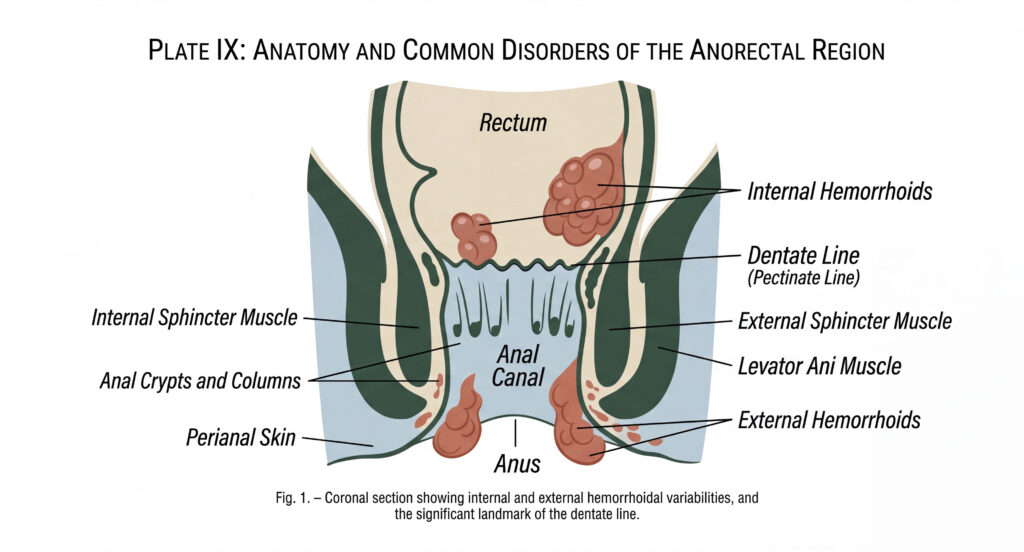
Internal hemorrhoids form in the upper portion of the anal canal, above a natural anatomical boundary called the dentate line. The tissue in this region has very few pain receptors. This means internal hemorrhoids often don’t hurt. But they may bleed, prolapse (protrude outward), or produce a sensation of pressure or fullness that’s difficult to explain.

External hemorrhoids

External hemorrhoids form below the dentate line, in the perianal skin. This area has the same dense nerve supply as regular skin. This is why external hemorrhoids tend to cause sharper, more obvious pain, particularly when they become inflamed or when a blood clot forms within one (this is called a thrombosed hemorrhoid, which causes sudden and severe localized pain).

Many people have both types simultaneously, which is why the symptom picture can feel inconsistent. Some days you feel pressure and fullness and other days you feel acute pain or bleeding without pain at all.
Anorectal disorders diagram

KEY DEFINITION

Hemorrhoidal tissue: Cushions of blood vessel tissue and connective fibers located inside the anal canal.

Why Hemorrhoids Keep Coming Back

Recurrence is one of the most frustrating things about hemorrhoid disease and also one of the most underexplained. Someone treats a flare, symptoms resolve, and then weeks or months later, the symptoms return. Understanding why this happens requires understanding what “resolved” actually means in this context.

When hemorrhoidal symptoms go away, the tissue hasn’t necessarily returned to how it was before the flare. The supporting connective tissue that weakened enough to allow prolapse is still weak. The bowel habits or pressure patterns that caused congestion are often still there. The skin and mucosal barrier, once disrupted, remains vulnerable to re-injury from the same irritants.

This is the gap between treating a flare and preventing the next one. Most over-the-counter (OTC) products address the flares, but very few address the prevention. Addressing the flare is not the same thing as addressing the conditions that produced it.

The most common drivers or recurrence include:

  • Diets that produce hard or infrequent stools, increasing the need to strain
  • Bowel habits such as delaying defecation, prolonged toilet sitting, or excessive wiping
  • Cleaning practices that irritate or strip the perineal tissue, including overuse of wet wipes, scented products, or alcohol-based cleansers
  • Hormonal fluctuations during menstrual cycle or pregnancy, which alter venous tone and connective tissue laxity
  • Underlying tissue factors that make some people more prone to prolapse

The presence of all these factors indicate that symptom management and prevention are not two separate issues. They are part of a single continuum, and the tissue itself is the common denominator.

What Actually Helps

  1. Make stool consistency the goal The main mechanical driver of hemorrhoid symptoms is straining. And straining almost always happens in response to stool that is too hard or too slow to pass. Increasing soluble fiber from foods like oats, psyllium, flaxseed, and legumes cuts the risk of persistent hemorrhoid symptoms by 53%, according to a 2005 review study. Staying well hydrated softens stool and reduces the need to push. This isn’t a short-term fix. This is the single most effective long-term intervention for reducing both symptoms and recurrence. Aim for stools that pass easily without efforts as a baseline, not something you work toward when you are flaring.
  2. Rethink what happens in the bathroom How long you sit on the toilet matters more than people realize. A 2025 research study found that using your smartphone while on the toilet is associated with a nearly 50% higher risk of developing hemorrhoids. Most healthcare guidelines suggest limiting toilet time to a few minutes. If nothing is passing after a short attempt, that’s a signal about stool consistency, not a reason to push harder. Elevating your feet slightly on a small footstool shifts your body into a posture that reduces effort required to pass stool.
  3. Protect the tissue barrier The skin and mucosal tissue around the anal canal is among the most sensitive in the body, and one of the most routinely mistreated. Scented products, alcohol-based wipes, harsh soaps, and aggressive wiping all compromise the barrier that protects this tissue. Look for cleaning approaches that are fragrance-free and gentle, followed by a skin protectant formulated for this area. The goal is to maintain the barrier, not strip it and hope it recovers.
  4. Know when to see a clinician Hemorrhoids are common, but not every anorectal symptom is a hemorrhoid. Rectal bleeding in particular, especially a first episode or any episode that feels different from previous ones, warrants evaluation by a healthcare provider. See our full guide on when to see a doctor for anorectal symptoms for a detailed breakdown of what needs a visit to your healthcare provider.

Frequently Asked Questions

Medical Disclaimer: This content is educational and does not constitute medical advice. Consult a qualified healthcare provider for diagnosis and treatment.

We use cookies and similar technologies to improve your experience and analyze website traffic. By using our site, you agree to our Privacy Policy.